EV vs Hybrid cons are the harsh, most often swept under the carpet, facts that can make an eco-dream into a nightmare. The message is all over: the electric vehicles (EVs) are the future that cannot be disputed, a smooth, conscience-free movement into a safer tomorrow. However, when is that future not quite ready for your present? What should we think, in the mad scramble of complete electrification, we have left behind us the deep practical benefits of the simple hybrid?
This is not a critique of EV technology in this article. It is a needed reality check. To most drivers, switching to the EV involves great sacrifices that a hybrid wipes out completely. We will take away the marketing hype and reveal to you the six ugly disadvantages of making a pure battery electric vehicle purchase instead of a hybrid. Such a fair comparison can save you a lot of money, a lot of frustration, and a terrible buyer’s regret. Let’s dive in.
Drawbacks: 1
The Image of Total Freedom: Range Anxiety and Charging Deserts
The range of an EV is the most promoted characteristic of an EV. However, this is its most vicious psychological fault as well.
The Harsh EV Reality
The range figure that you are viewing on the car sticker in the window is the best-case version, and is attained during perfect conditions, on flat roads, at low speeds. Driving in the real world is hardly ideal. During periods of cold weather, the range of an EV may reduce by 30-40 percent. Why? The battery chemistry is not so efficient, and a huge amount of energy is wasted in heating the cabin and the battery. The same, but slightly less dramatic, applies when one runs the air conditioning on a hot day. Driving highways at 70+ mph also burns power much faster than driving in the city, which is full of stops and starts.
This notchiness generates range anxiety, a low-grade stress that persists all the time as to whether or not you are going to get to your destination or the next charger. It turns a spontaneous road trip into a military operation, which is planned carefully, and the use of apps such as Plug Share is required to map all of the charging stops.
Then there is the problem of charging deserts. Beyond large urban traffic areas and on the major interstates, there is a paucity of reliable, fast-charging stations. Huge areas of rural America, as well as many suburbs, do not have public charging. An EV can be virtually unbearable without a reliable home charging.
The Hybrid Advantage
This anxiety is totally eliminated by a hybrid car. Its electric motor is useful in urban functions and driving at low speed, wastage of the fuel is avoided, and the gasoline engine is used in highway cruising and when the battery is weak. You have a two-way traffic.
The result? The normal mileage of 500-600 miles per tank is normal. Such a fill-up takes 5 minutes at any of the 100,000-plus gas stations nationwide. No deserts, there are oases. The freedom of a hybrid is real and unconditional, independent of the grid with charging.
Drawbacks: 2
The financial burden that is the Tax of Hiding Time: The inconvenience of Recharging
Our most precious non-renewable resource is time, and EVs require a lot of it.
The Harsh EV Reality
Charging has three levels, and each of them robs time in a different manner.
- Level 1(120 V outlet): This is the cord that is supplied with the car. It is painfully sluggish, and it gains about 3-5 ranges per hour. When drained, it could take more than 48 hours to fully charge. It can hardly perform any task beyond a top-up.
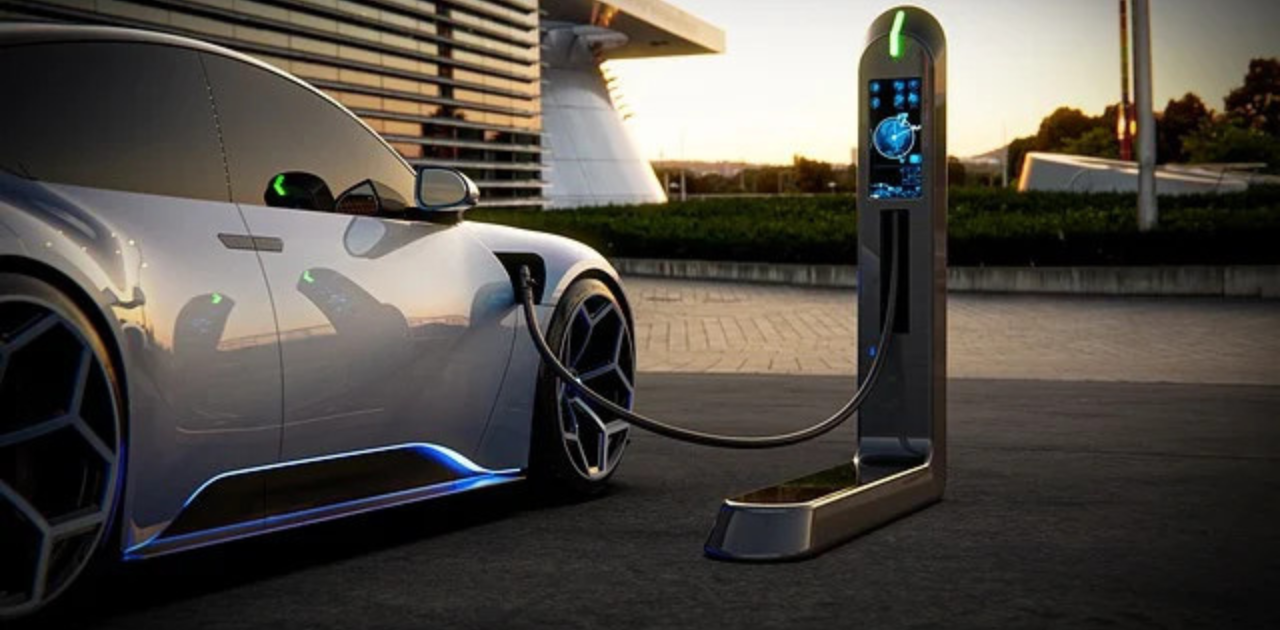
- Level 2 (240 V domestic/community charger): This is a requirement to own an EV. It increases by 20-40 miles per hour. An entire charge at home requires 6-12 hours, which means that you have to plug it in every night to be sure to have a full tank every morning.
- DC Fast Charging (Public stations): It is the most suitable when travelling long distances and can restore an EV to 80 percent within 20-45 minutes. This is not a fill-up, however. As well as waiting to charge the car, you are usually forced to do so in a lonely, bland parking lot with a charging station. Forty-five minutes is enough to consume a hurried meal, but that is a long time. More so, the charge rate plummets to a crawl as the battery approaches capacity to conserve it, meaning that the final 20 percent of a charge may take as long as the initial 80 percent.
This “time tax” adds up. The five minutes that you use to fuel a car once a week turn into dozens of hours annually that you spend waiting and dealing with to have your EV charged.
The Hybrid Advantage
A hybrid does not demand any modification of your fueling schedule. The refueling procedure is the same as that of a gasoline-powered vehicle: locate a station, fill the gas in five minutes, and you are set. You do not have a nightly ritual of plugging in or scheduling your day around the status of your car. The savings in time during the ownership period of the vehicle are enormous, and they are often totally neglected in cost-of-ownership calculations.
Drawbacks: 3
The Sticker Shock: The Sticker Price and Beyond.
It is no secret that EVs are high-priced to purchase, yet the real financial disadvantages go much deeper.
The Harsh EV Reality
- Increased MSRP: The battery is priciest. An EV is usually sold 10-15 thousand dollars higher than a similar gas or hybrid car.
- Installation of a Home charger: EV ownership requires a Level 2 home charger. The unit itself is between 500 and 800 dollars, and professional installation can cost an additional 1000-2500 dollars, depending on your home setup.
- High Insurance Premiums: EVs are costly to repair, have complicated technology, and have costly battery packs, thus tend to attract higher insurance premiums as compared to hybrid and gas cars.
- Tire Wear: EVs are considerably heavier than their counterparts because of the battery pack. This, coupled with the instant torque of electric motors, causes tire wear to accelerate. EV-specific tires are also costlier to replace.
- Electricity Price: cheaper than gas, but electricity is not free. Rates differ in the wildest way depending on the area and the time of the day, which introduces yet another variable cost.
The Hybrid Advantage
The cost difference between a hybrid and a gasoline vehicle is also a small amount of 2000-4000 dollars, and this is usually soon compensated for by the savings of fuel. The installation of home chargers is not required. Insurance prices are usually comparable to those of standard cars, and there is normal wear on tires. The financial offering of the hybrid is simple and foreseeable without any concealed initial investments.
Drawbacks: 4
The Questionable Green Credentials: The Battery and Grid Problem
In the case of most buyers, the major driving force is environmental. There is a misnomer about the zero emissions tag in an EV, though.
The Harsh EV Reality
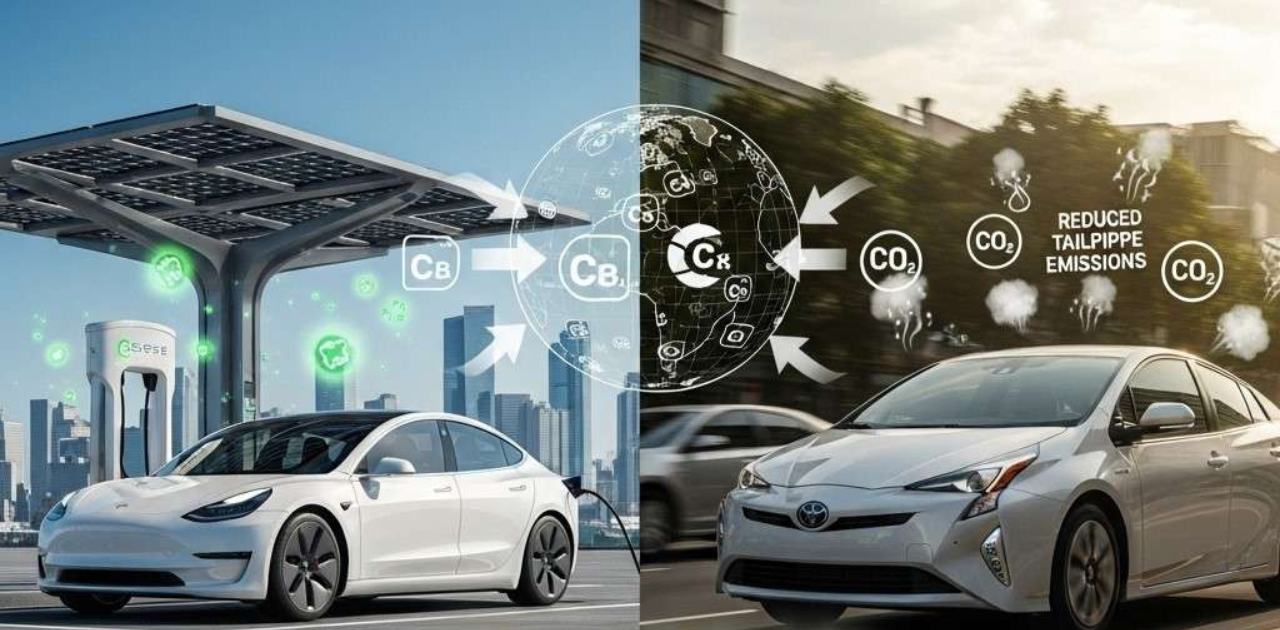
The total environmental footprint of an EV is formed in other areas: the vehicle does not have a tailpipe.
Battery Production: Mining of raw materials such as lithium, cobalt, and nickel is a power-consuming and, in most cases, damaging process. It may include water pollution, destruction of habitats, and heavy carbon emissions. Research shows that the carbon footprint of an EV is greater at the beginning of the construction process than that of a normal car (mostly because of the battery).
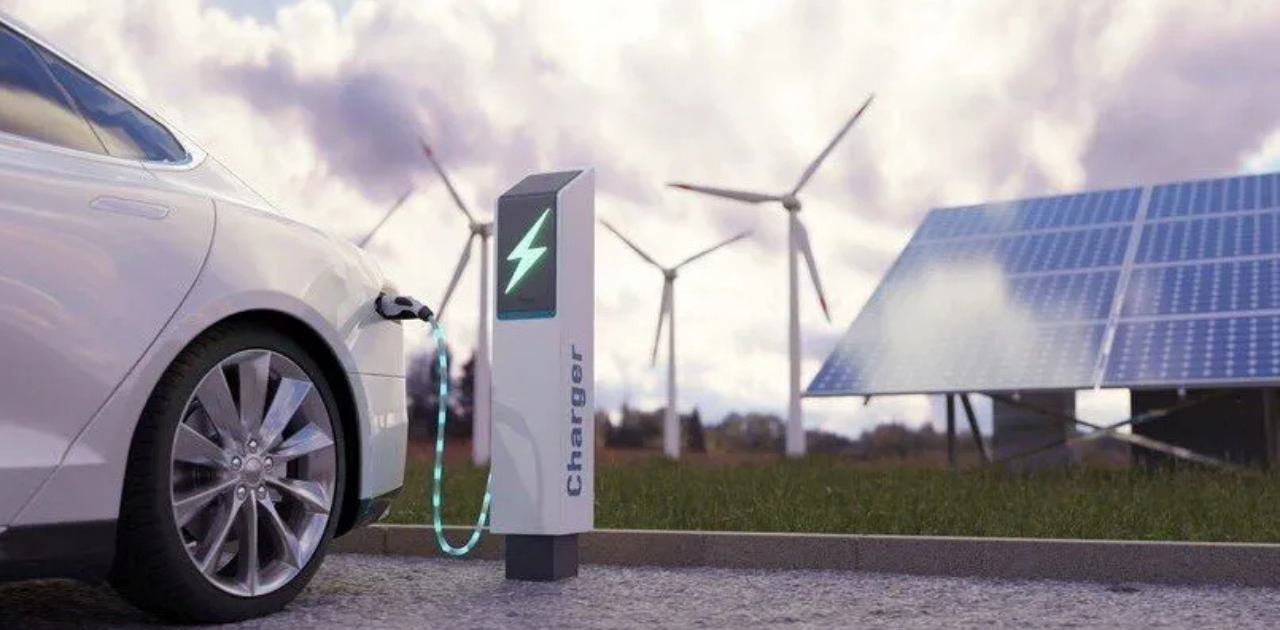
It is as clean as the grid that charges the EV. In the case of the current situation in the area where electricity is produced mainly on coal or natural gas facilities, even your clean EV will be powered indirectly by fossil fuels and emit at the power plant. In such places, lifetime emissions savings in a smart hybrid may be smaller than you may believe.
The Hybrid Advantage
The environmental advantage of a hybrid is direct and cannot be ignored. It uses a much smaller battery; thus, its manufacturing footprint is much smaller. Once it leaves the lot, it consumes less gasoline and it also generates fewer tailpipe emissions compared to a conventional car, usually 25-40% less. It does not need an ideal green electrical grid to make a difference. It’s a sure emissions cut today (without the huge carbon debt of a fully electric car).
Drawbacks: 5
The Battery Replacement and Depreciation Looming Financial Cliff.
The major weakness of EVs in terms of financial planning is that the long-term ownership cost is an enormous question mark.
The Harsh EV Reality
- Battery Degradation: Lithium-ion batteries diminish with time and have a decreased capacity to store a full charge. In 8-10 years, the range of an EV could be as little as 70-80% of its initial capacity, and thus greatly affect the usability and value of the device.
- The Replacement Cost: It is the largest financial sword of Damocles of all used EVs. It is also quite expensive to replace an entire battery pack, which costs between 15,000 and 25,000. By that time, the whole car is usually worth less than that. This is paralyzing the resale of older EVs.
- Rapid Obsolescence: EV technology is a fast-moving technology. The 250-mile range EV of today will be completely outdated in five years, as a 400-mile range will be the norm. Such a quick enhancement makes older models depreciate at a lower rate compared to more mature hybrid technology.
The Hybrid Advantage
The hybrid technology, especially in brands such as Toyota and Honda, has been developed and has proven to be highly reliable. A large number of first-generation Priuses are still on the roads with more than 300,000 miles on their original batteries. The battery is smaller and the system less complex, which makes replacement costs much less expensive (usually, $2,000-4,000). Hybrids have also earned a good reputation for long life, and their depreciation patterns are stable and predictable, thus making them a far safer financial investment in the long term.
Drawbacks: 6
Inconvenience of Infrastructure: The Home Charging Hurdle
This disadvantage is very basic yet absolute: when you cannot charge at home, you are not likely to have an EV.
The Harsh EV Reality
The ownership of EVs is constructed practically with the premise of home charging. To the people who own a single-family home that has a garage, this can be resolved (though at a high cost, as indicated). But to a very large part of the population, this is an impassable obstacle.
- Apartment Dwellers: It is usually a bureaucratic nightmare to entice a landlord or condo board to fit a charger into their building, should it be permitted at all.
- Street Parkers: Street parking people literally have nothing to plug in.
- Renters: It does not make much financial sense to spend thousands of dollars on installing a permanent charger in a house you do not own.
The use of public charging stations alone is not an option. It revives the radical time tax and range anxiety that cancels any convenience that an EV may propose.
The Hybrid Advantage
The eventual vehicle of universal compatibility is a hybrid. It does not need any new infrastructure, does not need the approval of a landlord, and does not demand any change in the way you live based on how you live. It is the ultimate environmentally friendly alternative to the urban population, tenants, and all other people who cannot confidently rely on the presence of a garage and charger. It suits any kind of lifestyle, at present.
Conclusion
The Pragmatic Choice in the Contemporary World.
The electrification drive is significant and unavoidable. Yet in 2024, the infrastructure and technology of pure battery electric vehicles and the economics require a great trade-off on the part of the owner.
The EV vs Hybrid disadvantages are not some trifles; it is more of a question of freedom, time, money, and feasibility. EV is not a car; it is a kind of lifestyle that needs to be placed in a given situation to be effective.
The hybrid is, in its turn, a pragmatic masterpiece. It has instant, great environmental advantages and none of the atrocious disadvantages. It saves you money at the pump without having to spend a lot of money initially. It makes you actually free to move without fear. It slots into your present life, even if you are in your mansion or apartment.
Check a cold assessment of your existence before you get swept by the magnificence of a completely electric future. To a great number of people, the hybrid is not a compromise: it is the most intelligent, efficient, and sensible option in the market at the moment. It makes you see that you can be good to the planet without hurting yourself. For more interesting insights, you can also explore some of the most brilliant underrated cars in the world that highlight how innovation often lies beyond the spotlight.
FAQs
Q1: What are the key downsides of EVs as compared to hybrids?
EVs experience range anxiety, take longer to charge, cost more to buy, require expensive battery changes, have dubious ecological concerns, and charging infrastructural concerns- problems of which hybrids are not.
Q2: What is the reason for having range anxiety with EVs?
EV range is reduced in cold or hot climates, at highway speeds, and due to the scarcity of charging stations, and it becomes a stressful affair to take a long trip without prior planning.
Q3: Do hybrids cost less than EVs?
Yes. The hybrids are cheaper initially, do not require home chargers, have unchanged depreciation, and have confirmed long-term reliability; hence, they are affordable.
Q4: Are hybrids better for the environment than EVs?
Hybrids have smaller batteries, lower tailpipe emissions than gasoline-powered cars, and evade the large manufacturing footprint and fossil-dependency of EV charging grids.
Q5: What is the largest hidden cost of being an EV owner?
Depreciation: It may be costly to replace a battery, up to $15,000 to $25,000, which is more expensive than a car after 8-10 years of ownership.
Q6: Who is not to purchase an EV?
EVs should be avoided by renters, apartment residents, and individuals who cannot access home charging, since public charging is both inconvenient and impractical.