The Comparison between EV vs Hybrid has become one of the most controversial issues in the automotive industry at present. Since an increasing number of consumers are moving towards purchasing environmentally friendly vehicles, the big question is whether a buyer should go with an all-electric vehicle (EV) or a hybrid vehicle (HEV/PHEV). Both have great perks to be excited about, yet both of them have distinct problems that imply that all smart buyers need to think right before committing themselves to one of them.
This paper will discuss 6 amazing facts in the comparison between EV vs Hybrid. These insights are aimed to assist intellectual customers such as you in weighing environmental effects, price, performance, driving capability, purchaser aptitude, and value over time. Towards the end, you will be in a better position to make an informed and future-ready decision.
Insight 1: Environmental Impact
What Car is actually greener? Speaking about the comparison between EV vs Hybrid, the first thing that comes to our mind is their driving range.
Electric Vehicles (EVs)
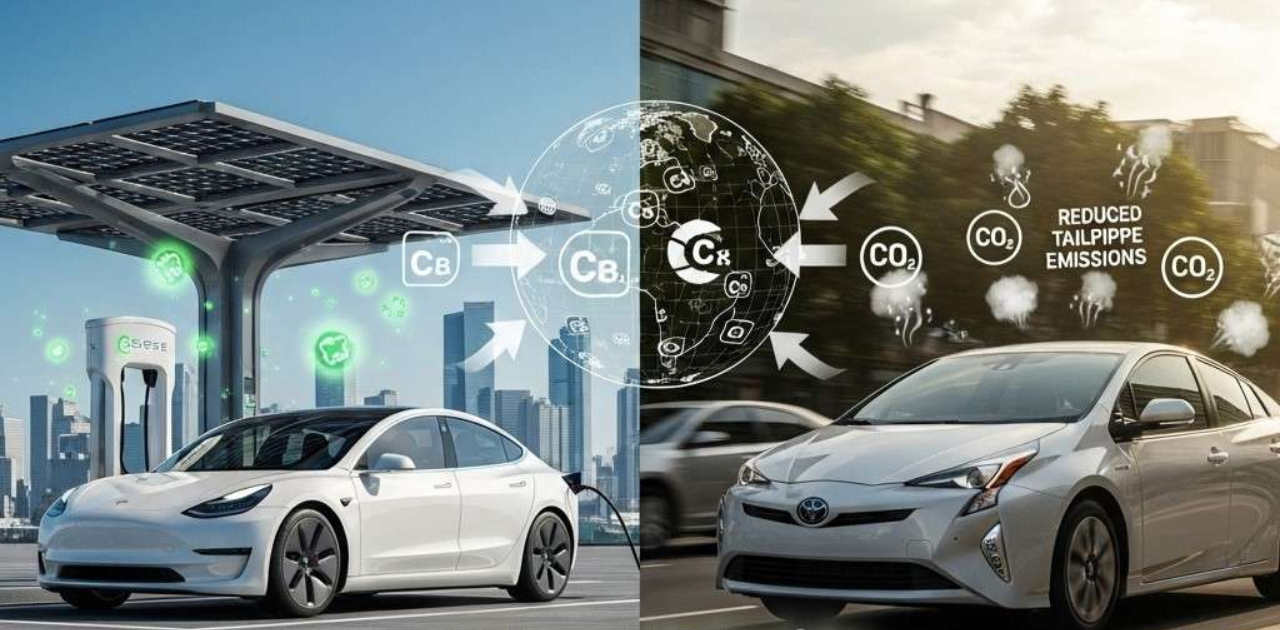
- EVs do not lead to tailpipe emissions, and, therefore, they are obviously the best option in cities where air pollution is a significant issue.
- They emit no emissions of fossil fuels during operation as they only need electricity.
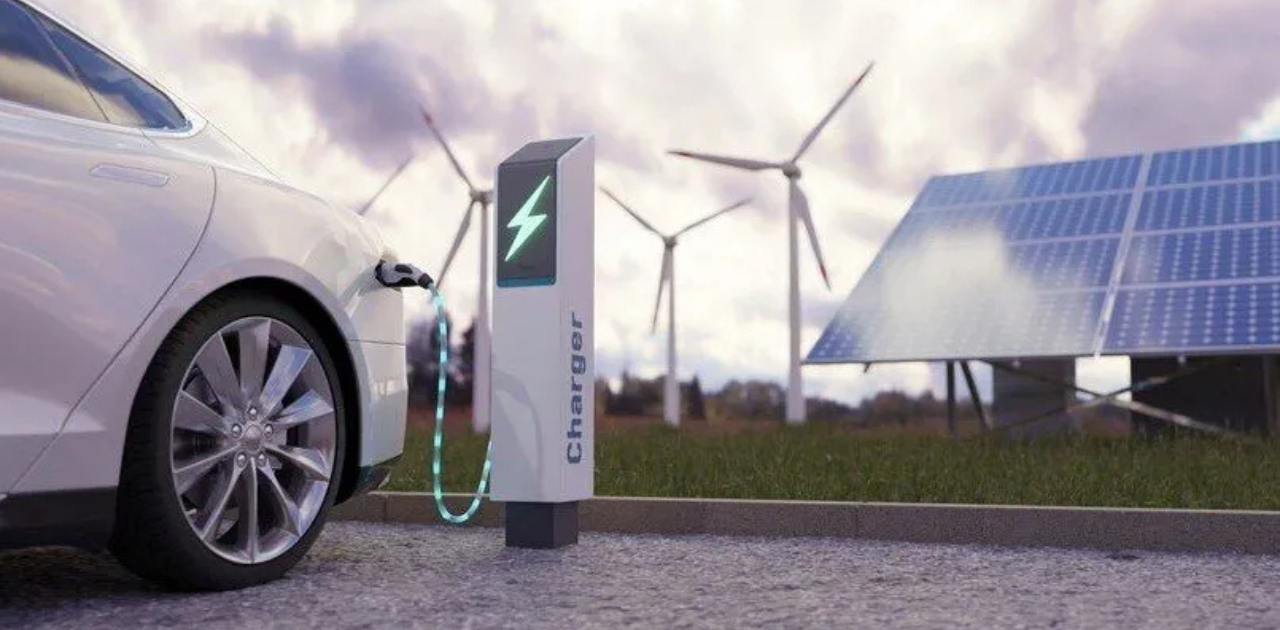
- EVs can also be combined with renewable energy sources (solar or wind) in order to minimize the amount of carbon emissions over a lifetime.
Hybrid Vehicles (HEVs & PHEVs)
- Hybrids are electric fuel-driven blends based on the use of both gasoline and electricity and, therefore, emit carbon dioxide, albeit in low amounts compared to normal cars.
- Plug-in hybrids (PHEVs): This goes beyond just carrying shorter distances with pure electric power, but has been shown to still use gasoline for areas with longer range.
- EVs, offline vehicles, and Hybrids are more environmentally friendly than regular gas vehicles, but cannot compete with the vision of zero emissions of an EV.
Verdict for Smart Buyers
EVs are better if you are environmentally friendly and wish to make a contribution to the environment through reduced emissions and less global warming. Nevertheless, hybrids have the potential to be an intermediate measure for those buyers who are not yet willing to move fully to electric infrastructure.
Insight 2: Cost of Ownership Upfront vs Long-Term Savings
Money also becomes very dominant in EV vs. Hybrid. Whether the high price of EVs at the beginning justifies the products is also a concern for many buyers.
Upfront Costs
- The difference between the purchase price of EVs and hybrids is usually high because battery technology is costly.
- Hybrids are often cheaper in the beginning, non-plug-in in particular.
Incentives & Tax Credits
- Most governments give tax credits, rebates, or even subsidies on EV purchases.
- Hybrids may have fewer incentives: increasingly, US and Canadian government policies concern all-electric vehicles.
Running Costs
- EVs are cheaper to “fuel.” The electricity is much less expensive than gasoline, which can save thousands of pounds annually.
- Hybrids are more fuel efficient than internal combustion vehicles, and this does not make them gas guzzlers.
Maintenance
- EVs include fewer moving parts (No oil replacement, fewer belts, and a change of transmission fluid).
- Hybrids do need to have the engine maintained.
Verdict for Smart Buyers
Everything depends on whether you have an opportunity to cover the initial price; EVs are more advantageous in terms of savings. In the 8-10 year period, EV owners can spend a lot less money on maintenance and fuel than hybrid owners can.
Insight 3: Performance and Driving Experience
It is not only about price when an EV is compared to a Hybrid, but also the way they drive on the road.
EV Performance
- EVs are characterized by instant torque, which provides excellent acceleration and handling.
- EVs will be appealing with quieter cabins, fewer vibrations, and futuristic technology features.
- Pelo recuperative braking causes greater efficiency of energy and comfort behind the wheel.
Hybrid Performance
- Provides both a compromise: gasoline power with the ability to travel long distances, and electric mode, with the ability to drive small distances.
- Otherwise, improved change of power in the current hybrids.
- Nevertheless, acceleration and performance tend not to be as superior to those of EVs.
Verdict for Smart Buyers
EVs cannot be matched in case the most important things are performance and the art of driving experience. Hybrids are reasonable, and they are not as exciting as a fully electric drive.
Insight 4: Convenience of Range and Charging
Among the largest issues of the comparison EV vs. Hybrid, there are driving range and fueling/charging convenience.
Range Anxiety with EVs
Most EVs currently start at 250 to 350 miles, and luxury models reach above 400 miles.
- There is range anxiety that has not disappeared, particularly in areas that have a limited number of charging stations.
Charging Infrastructure
- There is charging at home, which is convenient but entails some costs of setting up (home chargers).
- Public charging stations are increasing at an alarming pace, yet they are yet to achieve widespread spreaders like gas stations.
Hybrid Convenience
- Hybrids have no range anxiety since they use gasoline in cases when the car lacks power.
- Refueling is fast and available at any place.
Verdict for Smart Buyers
A hybrid can be more viable if you spend a lot of time on the road and have an inadequate number of charging stations in your neighborhood. EVs are much more convenient and cost-effective; however, for city drivers, it is possible to charge.
Insight 5: Optimal when dealing with the various kinds of buyers
EV vs. Hybrid comparison does not go as far as technical specifications, but the way in which it is to be used involves the lifestyle and requirements of the purchaser.
Best Suited for EVs
Ex: city dwellers who have access to charging.
- Environmentally-friendly consumers who desire zero emissions.
- Technology lovers are seeking high-end features and a stylish design.
Best Suited for Hybrids
Long-distance travelers who require the gasoline reserves.
- Consumers in rural communities who lack power stations.
- Cost-efficient customers who desire higher fuel efficiency but a cheaper price.
Verdict for Smart Buyers
There’s no one-size-fits-all. EVs will be ideal to appeal to future-aware consumers, whereas hybrids will serve as the stable product between those who are not ready to make the full transition to electric cars.
Intuition 6 Future Value Resale Pattern
In EV vs. Hybrid, future value is one of the determining factors among a lot of buyers.
Resale Value of EVs
- First, EVs have been faster to depreciate because of problems with batteries.
- EV resale values are increasing today with the increasing demand and the development of battery technology.
- EV infrastructure, the governments and manufacturers invest with heavy investments, which contribute to increased long-term confidence.
Resale Value of Hybrids
- Hybrids have been known to be good in the resale value since it has been known to be reliable.
- Nonetheless, hybrids might become less popular as EVs become increasingly popular.
Future Trends
- The adoption of EVs is bound to soar in the coming ten years.
- Recycling of batteries and reusing second-life applications will minimize depreciation even more.
Verdict for Smart Buyers
EVs will start to be a future-proof position. At the moment, hybrids are stable, but they might decrease in value more rapidly when the world moves to fully electric means of transportation.
Conclusion
The EV vs. Hybrid draws your attention to one detail: no out-of-the-question winners; it will all depend on your way of life, financial means, and perspectives. Through such 6 incredible insights, though, we are actually able to notice obvious differences:
- EVs are healthier and environmentally friendly.
- EVS is still the winner based on cost savings when it comes to costs in the long term.
- EVs cannot compete in terms of performance.
- In regions with a shortage of charging, range convenience continues to favor the hybrids.
- Varied buyers are advantaged one way or another-urban/ rural, eco/ budget conscious.
- In the coming days, EVs evidently have a brighter future regarding adoption and their resale price.
To intelligent consumers, every decision in buying a car is about weighing up their driving trend, financial needs, and future aspirations. The options available are either an EV or a hybrid, either of which is much better than remaining traditional gas-powered cars. For a deeper breakdown of this debate, you can also check out this detailed guide on EV vs Hybrid: 6 Harsh Truths.
FAQs
Q1. EV or Hybrid, which one is more environmentally friendly?
EVs are superior as they can have zero tailpipe emissions, and in particular cases, are powered by renewable energy. Hybrids do not stop the emission of carbon dioxide because they use gasoline partially.
Q2. Harder to afford EVs than Hybrids?
Yes, EVs are generally expensive initially because of the battery technology. But in the long run, the EVs are more cost-effective since they are economical in fuel and repairs.
Q3. Are Hybrids more agreeable than EVs?
Generally, yes. A battery that can run and switch to gasoline when it is low allows hybrids to take away range anxiety. EVs require charging stations, but the current EVs can cover 250-400 miles of range.
Q4. EV and Hybrid: Which one should be smartly used by the urban traffic workers?
EVs take up less space than charging stations available to city drivers due to low running costs and zero emissions. Rural or longer-island drivers may be those who require hybrids.
Q5. What is the resale value: EV vs. Hybrid?
The hybrids have always had a high resale value, but EVs are moving at a high pace. As the demand will be high and the technology of the battery will be upgraded, EVs will be more valuable in the future.